본문 바로가기

[ENG] Daegu Art Museum_ International exchange exhibition_Rembrandt 17th century photo grapher

구글 선호 매체로 추가

'Gazing towards the world' of the greatest painter in the history of Western art

Daegu Art Museum presents Rembrant, 17th Century Photographer as an international exchange exhibition for 2023 in the first exhibition hall from October 31th 2023 to March 17th 2024. The exhibition is a large-scale collaborative exhibition to present 120 etchings by Rembrandt. Daegu Art museum has planned for the exhibition over the past year with Stichting Rembrant op Reis and Museum de Reede. 

Rembrandt Harmenszoon van Rijn, known as the "painter of light," is the greatest painter in the history of Western art. No other 17th century artist produced as many self-portraits as Rembrandt, and he used dramatic chiaroscuro(light and dark) in his paintings to create a feeling of space.

Furthermore, He was also a unique etcher who has left a great legacy in the history of printmaking, especially etching, to the extent that art historians have said, "The history of printmaking was rewritten after Rembrant." He created more than 300 etchings using etching and dry point techniques during his lifetime.
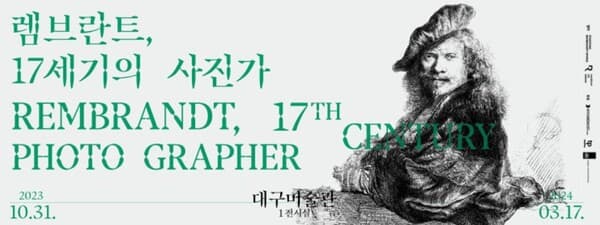
 

'Rembrandt, 17th Century Photo Grapher' The international exchange exhibition's Poster. ⓒ Daegu Art Museum


Daegu Art Museum aims to shed light on Rembrant's life and art, and to share light and darkness within, and above all, his gaze towards the world. Daegu Art Museum hopes that this international exchange exhibition will give you the opportunity to follow the gaze of a great painter who warmheartedly gazed at the world and people, and listen to the stories he tells.

The crucial point to the exhibition is that it's a very unique exhibition that sheds light on his printmaking instead of his oil paintings. Although the works of Rembrant are still very much in the history of Western art, we have few opportunities to appreciate the beauty of it. The exhibition is a key feature in introducing 7 categories, such as 'Self-portraits', 'Beggar & Streetfolk', 'Biblical Scenes', 'Allegories & Genre Scenes', 'Landscapes', 'Sheets of Studies', 'Face & Portraits', and etc with 120 copperplate prints as well as visual materials and the contemporary works of other artists.
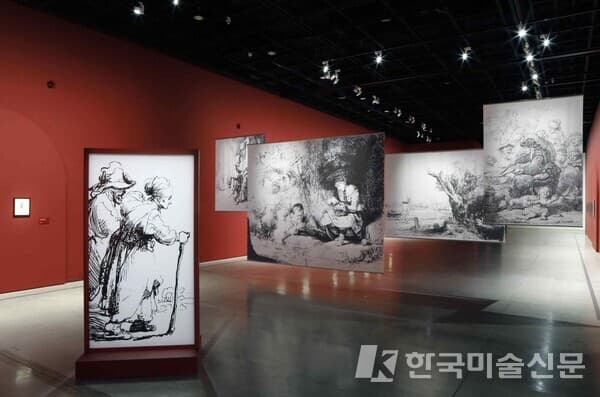
 

 Deagu art museum's the first exhibition hall ⓒ Daegu Art Museum
 Deagu art museum's the first exhibition hall ⓒ Daegu Art Museum
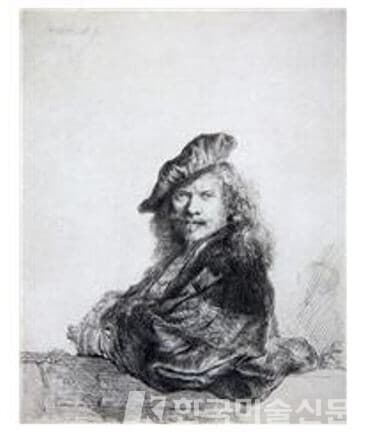
Self-portrait in leaning against a stone pence 1639. Etching and some drypoint. ⓒ Daegu Art Museum


Self-portraits is an important part of Rembrants. On the basis of these works we can today observe what he looked like and how he aged over time. Rembrant was unhappy in his old age. When you actually see the self-portraits, you can feel the range of emotions such as happiness, anger, or fright. His overconfident attitude turned into getting the feeling of loneliness. This exhibition will give you the opportunity to know that Rembrant was focused on the inside.

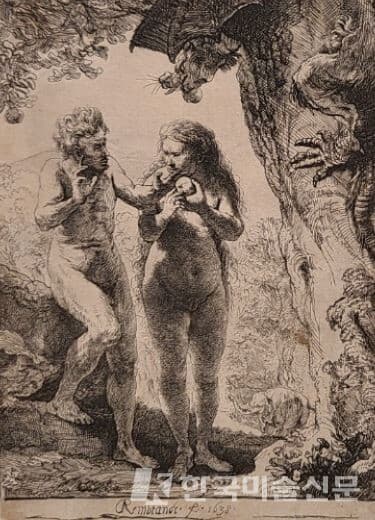
The lion's share of Rembrant's oeuvre is made up of narrative images with scenes from the Bible. He was aware of the traditional images but often chose his own unique interpretation, like portraying Adam and Eve as normal people instead of idealistic youths. They even look old and wrinkled. This image was painted to emphasize the point with human corruption that Adam was reaching his hand to eat the forbidden fruit.


Adam and Eve, 16.2 x 11.6cm, Etching, 1638. ⓒ Daegu Art Museum


Jaap Mulders, an art collector who has admired and loved Rembrandt's copperplate prints for the past few decades, said, "If Rembrandt had been born in modern times, he would have become a photographer, not a painter or printmaker." Although Jaap Mulders has admired Rembrandt's copperplate prints for a long time, he has often been amazed by new part. When appreciating the works, it is recommended to take a slow deep look at them.


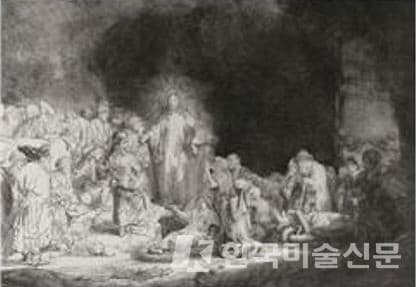
Jesus Healing the Sick-the Hundred Guilder Print, 27.8 x 38.8cm, Etching, drypoint and burin, 1648. ⓒ Daegu Art Museum


관련 기사

댓글 0

첫 댓글을 남겨보세요.

댓글 작성

0/2000

댓글은 검수 후 노출됩니다. 비방·욕설은 삭제될 수 있습니다.