사진 제공 = 브라이언 하웰 & 갤러리 존스 (All images courtesy of Brian Howell & Gallery Jones)
밴쿠버 기반의 다큐멘터리 사진작가 브라이언 하웰(Brian Howell) 이 신작 전시 ‘체인톱 로르샤흐 테스트(Chainsaw Rorschach Test)’를 통해 인간의 기억, 심리, 기술문명에 대한 질문을 던진다.
사진 제공 = 브라이언 하웰 & 갤러리 존스 (All images courtesy of Brian Howell & Gallery Jones)
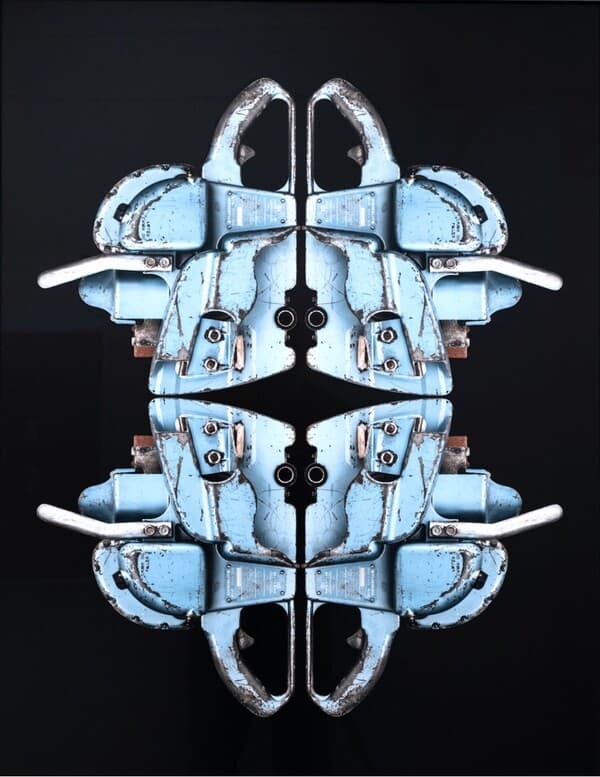
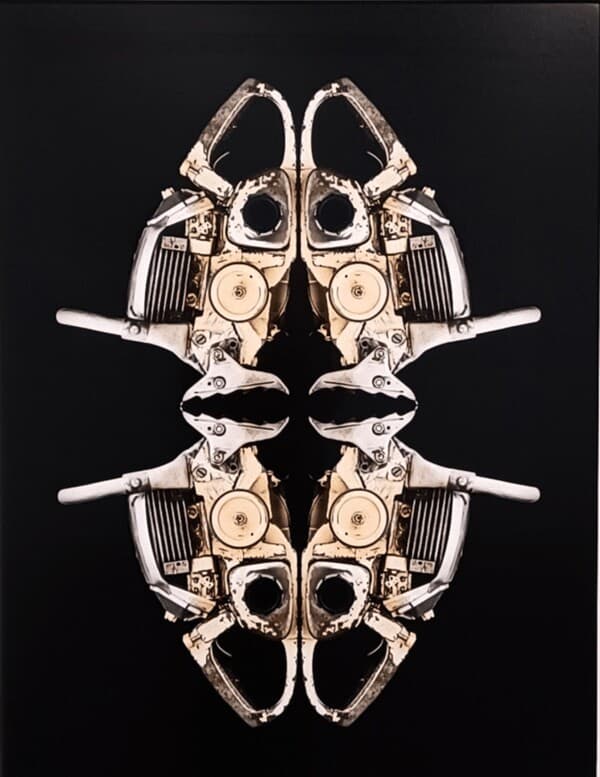
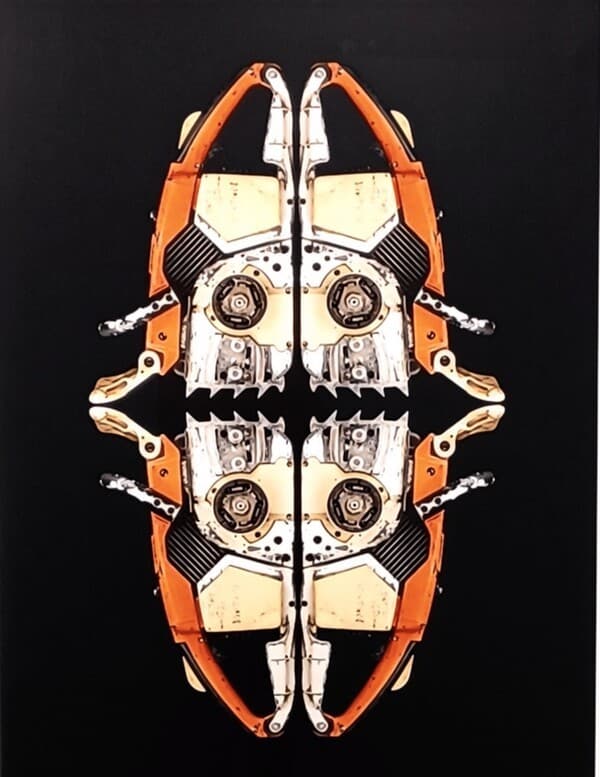
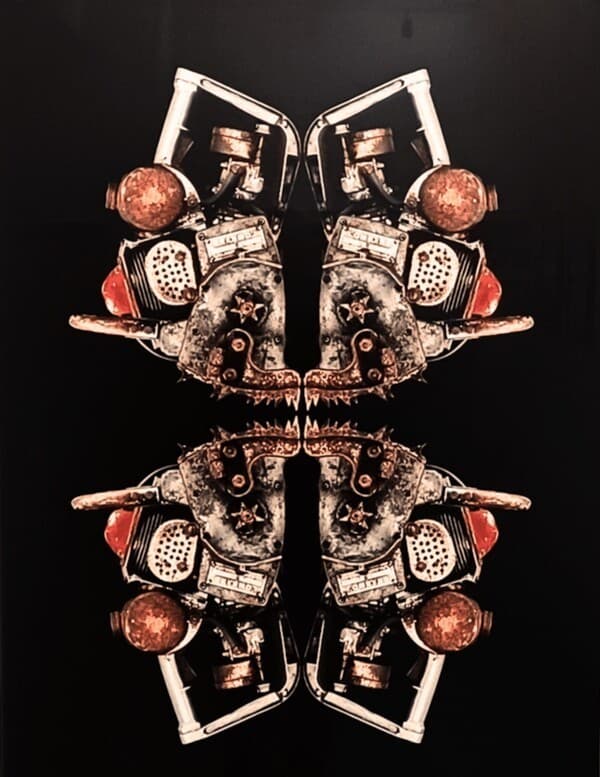
작가는 이번 전시에서 빈티지 체인톱(전기톱)을 분해·재조합하여 마치 기계 곤충, 전통 가면, 혹은 잊힌 산업 도구로 인식될 수 있는 대칭적 조형물을 구성했다. 전시는 관람자 개개인의 감각과 무의식 속에 감춰진 상징을 끌어올리며 독특한 몰입을 유도한다.
사진 제공 = 브라이언 하웰 & 갤러리 존스 (All images courtesy of Brian Howell & Gallery Jones)
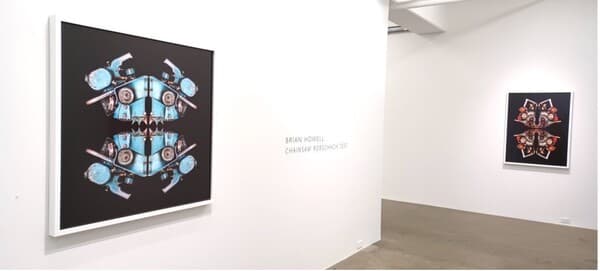
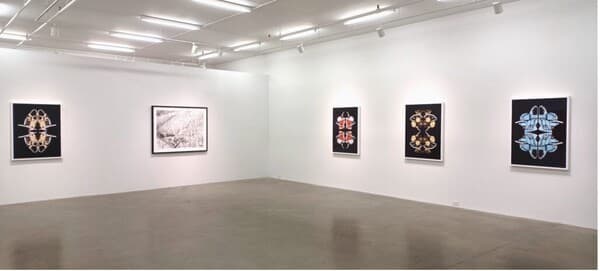
이번 시리즈는 밴쿠버 시내 갤러리 존스(Gallery Jones)에서 열리고 있으며, 전시장을 찾은 이들은 단박에 시선을 빼앗긴다. 강렬한 검은 배경 위, 메커니컬한 형태로 대칭을 이루는 이미지들은 얼핏 보면 SF 영화 속 메카닉 생물 같지만, 자세히 들여다보면 오래된 체인톱의 나사, 금속 핀, 날의 흔적들이 그대로 드러난다.
사진 제공 = 브라이언 하웰 & 갤러리 존스 (All images courtesy of Brian Howell & Gallery Jones)
하웰은 “누군가는 곤충으로, 또 다른 이는 전통 가면으로, 혹은 그대로 기계 부품으로 보았다고 한다”며 “파키스탄에서 어린 시절 보았던 동일한 톱을 작품에서 마주하고 놀란 관객도 있었다”고 전했다. 작가는 관객의 반응을 관찰하는 일 자체가 이 시리즈의 중요한 연장선임을 강조한다.
이번 전시는 단순한 오브제 사진이 아니다. 하웰은 “빈티지 체인톱은 인간 산업의 상징이자, 동시에 자연 파괴의 도구”라며 “산업화의 찬란한 유산과 그 그림자를 함께 담고 싶었다”고 말한다.
체인톱은 캐나다가 1937년 처음 상용화한 도구로, BC주에 도입된 이후 산림 벌목 속도는 불과 2년 만에 20배로 증가했다. 산림은 곧 ‘수익’이 되었고, 체인톱은 진보의 아이콘이자 파괴의 은유로 기능했다.
사진 제공 = 브라이언 하웰 & 갤러리 존스 (All images courtesy of Brian Howell & Gallery Jones)
하웰은 이 체인톱을 로르샤흐 테스트(Rorschach Test)라는 심리학적 구조 안에 대입함으로써, 시각적 대칭과 개인 해석의 경계를 흐린다. “이 시리즈는 과거와 현재를 연결하는 시각적 에코(echo)다. 인간이 만들어낸 기술과 그 결과가 어떻게 환경을 형성해왔는지를 말하고 싶다”고 그는 전했다.
“작품 속 대칭은 혼란스럽고 무의식적인 형태 속에서 ‘질서’를 찾고자 하는 인간 본능을 보여준다. 동시에, 우리가 만든 기술이 지닌 이중성과 우리의 책임을 되돌아보게 한다”고도 덧붙였다.
사진 제공 = 브라이언 하웰 & 갤러리 존스 (All images courtesy of Brian Howell & Gallery Jones)
하웰은 초기 작업에서부터 이미 경계의 미학에 천착해 왔다. 첫 번째 사진집 《One Ring Circus》에서는 브리티시컬럼비아주의 인디 프로레슬링 씬을 기록하며 지역성과 정체성을 주제로 다뤘고, 두 번째 사진집 《Fame Us》에서는 유명인 모창 배우들의 초상을 통해 대중문화와 진짜-가짜의 경계를 비판적으로 성찰했다. *뉴욕타임스(The New York Times)*는 이를 두고 “2007년 가장 섬뜩한 사진집”이라 평했다.
이후 《Shopping Carts》와 《Burnt Forests》 등으로 이어지는 시리즈에서 하웰은 쓰임을 다한 사물, 불타버린 숲, 공공장소의 잔재 등을 통해 ‘무너진 것들이 드러내는 진실’을 집요하게 포착해왔다. 이번 전시 ‘체인톱 로르샤흐 테스트’는 그러한 하웰의 탐구가 시각적 대칭이라는 새로운 미학적 언어를 만나 한층 정제된 형태로 구현된 결과다.
Blades of Perception: Brian Howell’s ‘Chainsaw Rorschach Test’ Reveals a Fragile Symmetry
Where psychological metaphor meets mechanical memory in a striking new exhibition
In his latest exhibition Chainsaw Rorschach Test, Vancouver-based photographer Brian Howell invites viewers to explore the intersection of industrial memory, visual perception, and unconscious symbolism. Known for documentary works grounded in social commentary and cultural critique, Howell presents a deeply introspective and arresting new series—composed entirely of vintage chainsaws dismantled and reassembled into symmetrical, insect-like forms.
Presented at Gallery Jones in downtown Vancouver, the exhibition draws in viewers with its uncanny visual presence. Against a stark black backdrop, each piece appears at first to be a kaleidoscopic machine—a surreal mechanical insect or a ceremonial mask. But on closer inspection, bolts, rusted blades, and handles betray their utilitarian origin: chainsaws long since retired from use.
“The feedback has been fascinating,” Howell shares. “Some saw insects. Others saw traditional masks. A gentleman from Pakistan recognized a saw he hadn’t seen since his childhood. And for many, it wasn’t immediately apparent that the works were made from old chainsaws.”
That ambiguity lies at the core of Howell’s visual strategy. Each image is a deliberate Rorschach composition—constructed not only to deceive the eye but to provoke psychological inquiry. The chainsaw becomes more than a tool; it becomes a metaphor for perception, progress, and destruction.
“The chainsaw represents a duality,” Howell says. “It’s a symbol of human industry, of progress—but also destruction. In British Columbia, the introduction of portable chainsaws in 1937 transformed the forestry industry overnight. By 1939, tree fallage had increased twentyfold. It reshaped the land, the economy, and our relationship to nature.”
In juxtaposing the sharp, mechanical contours of the chainsaw with the symmetrical, almost spiritual language of the Rorschach Test, Howell creates a tension that asks more questions than it answers. “The symmetry draws viewers in,” he says, “but it’s the chaos behind the order that holds them.”
Each piece becomes a kind of visual echo—an aesthetic fossil of the industrial past, reverberating with the consequences of technological ambition. The chainsaw, a tool of both creation and destruction, becomes a symbolic bridge between past and present, ecology and industry, psyche and machine.
“This is a call for reflection,” Howell adds. “By confronting viewers with relics of a bygone industry—arranged in a form that demands interpretation—I hope to encourage a deeper awareness of our collective environmental footprint. These are not simply objects; they are markers of our choices.”
This exhibition is not an isolated departure for Howell. His earlier work One Ring Circus, a photo book documenting the underground world of indie wrestling in British Columbia, revealed his enduring interest in fringe cultures and the construction of identity. Fame Us, his second photo series, focused on celebrity impersonators and was dubbed “the eeriest photography book of 2007” by The New York Times.
From shopping carts to burnt forests, Howell has long been drawn to what society discards or overlooks. In Chainsaw Rorschach Test, those discarded artifacts are reborn—not only as visual statements, but as psychological mirrors.
편집자 주:
이 기사는 캐나다 라이프스타일 매체 Folio.YVR Luxury Lifestyle Magazine 편집장 헬렌 시왁(Helen Siwak)이 취재 및 보도한 내용을 바탕으로, 저작권자의 승인을 받아 퍼블릭뉴스가 추가 취재와 확인을 거쳐 번역한 것입니다. 영어권 독자의 이해를 돕기 위해 영어 원문을 함께 제공합니다. 본 기사의 모든 내용은 저작권법에 의해 보호되며, 무단 복제 및 배포를 금지합니다. 또한, 본 기사의 자료는 AI 학습 목적으로 사용할 수 없습니다. 자세한 내용은 Folio.YVR Luxury Lifestyle Magazine의 공식 사이트 issuu.com/folio.yvr에서 확인할 수 있습니다.
This article is based on coverage and reporting by Helen Siwak, Editor-in-Chief of the Canadian lifestyle media outlet Folio.YVR Luxury Lifestyle Magazine. With the approval of the copyright holder, Public News has conducted additional research, verification, and translation to produce this version. For the convenience of English-speaking readers, the original English text is provided alongside the translation. All contents of this article are protected under copyright law, and unauthorized reproduction or distribution is strictly prohibited. Additionally, the materials in this article may not be used for AI training purposes. For more information, please visit the official website of Folio.YVR Luxury Lifestyle Magazine at issuu.com/folio.yvr.